J. Mark Oliver DDS PA

High Quality H2O

Whether you’re drinking from a glass that is half-empty or half-full, drinking a glass of water is always beneficial to your health. Human beings are 60% water; so staying hydrated throughout the day is crucial for the hydration of tissue, the distribution of nutrients, and the removal of waste from your body. Not only is drinking water beneficial to your overall health, but your dental health as well!

'woman drinking water'Here are four reasons why water is the best beverage for your teeth:

1. Water keeps your mouth clean.

Water cleans your mouth with every sip! As your drink, water washes away leftover food and any residual cavity-causing bacteria. Water also reduces the pH of your mouth by diluting the acids produced by bacteria that live in your mouth. Don’t forget to brush your teeth twice a day for two minutes, but drinking water throughout the day will help keep your smile healthy and cavity-free.

2. Water strengthens your teeth.

Drinking water with fluoride, aka “nature’s cavity fighter”, is one of the easiest and most effective ways to fight cavities. While almost all water contains naturally-occurring fluoride, the community water systems that serve most American households adjust the level, usually by adding fluoride to achieve the right amount to reduce tooth decay. Health organizations, like the American Dental Association (ADA), say this is one of the major reasons most people no longer need the dentures that were so common before widespread fluoridation, and studies have shown that it is why dental costs are lower and oral health problems have declined in fluoridated communities!

3. Drinking water fights dry mouth.

Saliva is the human mouth’s first defense against cavities. Saliva helps wash away residual food and coats your teeth in calcium, phosphate, and fluoride. When your mouth doesn’t have enough saliva, you run the risk for tooth decay. When your mouth is feeling dry, drink a glass of water to quench your thirst, and strengthen your teeth!

4. Water is free of calories.

Drinking sugary beverages can create a cavity-prone environment within your mouth, and can lead to weight gain. Studies show that drinking water, eight 8-ounce glasses or 8×8, can help you lose weight.

If you have questions regarding water consumption or your overall dental health, don’t hesitate to call J. Mark Oliver DDS PA at J. Mark Oliver DDS PA Office Phone Number 336-724-5054 today!
Learning the Lingo – Dental Implants

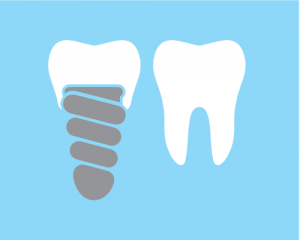
Dental implants are a safe and effective replacement for a missing tooth or teeth. The implant is placed in your jawbone and integrates with your natural bone. This implant then forms a stable, sturdy base for your new teeth.

'dental implant and tooth'What They Are

Implant: The implant itself is a rod that is screwed into the jawbone.

Abutment: This is the connection between the implant and the crown.

Crown: A tooth shaped cap that is attached to the abutment. It is the part of the tooth that is visible above the gum line.

What They’re Made Of

Titanium: Most implants are typically made of titanium, a biocompatible metal.

Zirconia: Often used for crowns and bridges and can be used as a metal-free option. Zirconia is biocompatible just like titanium.

Where They Go

Endosteal Implants: Placed in the jawbone. These implants are typically shaped like small screws, cylinders or plates, and they are the most commonly used.

Subperiosteal Implants: Placed under the gum, but on or above the jawbone. These implants are mostly for people with smaller jaws or shallow jawbones.

What Happens To Them

Osseointegration: Creates strength and durability by fusing directly to the bone and is bio-compatible. Bone cells attach themselves directly to the titanium/zirconium surface, essentially locking the implant into the jaw bone. Osseointegrated implants can then be used to support prosthetic tooth replacements of various designs and functionality. Anything from a single tooth, to all teeth in the upper and lower jaws. The teeth/crowns are usually made to match the enamel color of the existing teeth to create a natural appearance.

Bone augmentation: Some people do not have enough healthy bone to support dental implants, so bone must be built. Procedures can include bone-grafting which means adding bone to the jaw.

Talk to us today at J. Mark Oliver DDS PA to discuss your options with an implant specialist!

10 Tips to Prevent Gum Disease

Gum disease can be serious business if left untreated. The good news is, with regular maintenance and good oral hygiene, you can avoid and even reverse the early stages of gum disease. We’ve put together some tips for you that will help you prevent gum disease.

'gum disease'Maintaining a Clean Mouth

Brushing your gums, as well as your teeth after every meal is the best way to take care of your teeth. Remove those food particles without being too hard on your enamel. We can show you the best method at your next appointment.

Dental floss can reach those spaces in your mouth that a tooth brush just can’t get to. Get in between your teeth with floss before you brush, so that any food you pull out can be picked up by your tooth brush.

While you shouldn’t rely on mouthwash alone, certain mouthwash products are great for killing bacteria. Consult our office for suggestions as some products are better than others.

Practice Good Overall Health

Keeping a balanced diet keeps your whole body healthy. Staying away from eating too much sugar is a great place to start. Making sure you get all the nutrients you need helps your body fight bacteria, including those that can cause gum disease.

If you are a smoker, quit! Smoking is not just awful for your lungs, smoking leads to tooth decay, tooth loss and poor gum health. Smoking leads to the creation of pockets in your gums, where bacteria collect and form tartar. It also degrades the tissues that hold your teeth in place.

Talk to Your Doctor about your Medications

It may be worth talking with your doctor about the side effects of any medication you may be on. Some drugs lead to bacteria build up in the mouth, or affect the flow of saliva that keeps that bacteria from settling.

Hormones can also play a role in oral health. If you are experiencing hormonal changes, you may be experiencing tooth sensitivity, and promoting the development of gum disease.

Stress

Stress affects your body’s ability to fight infection. Evaluating the stress in your life and what you can do to manage it is a great idea to promote your general health.

Appointments

Regular oral health visits are the best way to pin down gum disease. The professionals at our office are trained to notice the kinds of things you may not see in your mouth.

You may not have considered that your crooked teeth put you at risk for gum disease. Having straight teeth means eliminating certain pockets where gum disease can develop. Braces are a great way to do this.

Contact our office today to set up your next appointment!

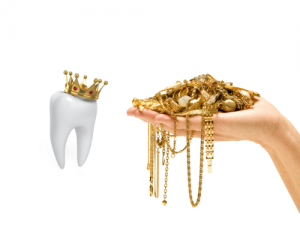
Popular “Crowns” in History

Crowns are one of the most common restorative procedures we perform in our office! Here are some other interesting facts about teeth and our favorite “crowns”:

'tooth with crown' 'gold in hand'Myth:

Did you know a common myth surrounding one of our founding fathers, George Washington, was that he had wooden teeth? Contrary to popular belief, Washington actually had false teeth made of ivory, gold and even lead, but the stained wooden appearance of the contraptions he wore made them seem like they were made of wood.

Fact:

In 1847 Queen Victoria’s husband, Prince Albert, had their first daughter’s milk tooth made into a brooch! It was a gold enamel brooch in the shape of a thistle with the baby tooth at the top of the “blooming” flower.

Fact:

Prince Albert also loved hunting and there are several jewels that are set with the teeth of stags. It is possible that stag’s teeth jewels and infant teeth were examples of Prince Albert introducing Queen Victoria to German forms of commemorative jewels. Prince Albert was born in Bavaria in southeastern Germany, and deer teeth are part of traditional Bavarian dress to bring good luck in hunting. Prince Albert gave the tooth necklace to Queen Victoria in 1860. It contains 44 teeth from stags that he had hunted on the royal estate at Balmoral. Along with the necklace, in 1851 Prince Albert also had a holly brooch set with two stag’s teeth tied with Royal Stuart tartan ribbon. It was a souvenir of Balmoral and a birthday gift from his wife.
Check out these interesting jewels here! (insert link) https://www.royalcollection.org.uk/sites/default/files/V%20and%20A%20Art%20and%20Love%20(Gere).pdf

Ancient Fact!

Even further back in history than tooth jewelry, is jewels in teeth! A skull found in Chiapas, Mexico had teeth adorned with jade and blue stones, evidence that fashion and dental restorations existed as far back as the 1500s!

Get the royal treatment here with us at J. Mark Oliver DDS PA and have a crown to be proud of!
Call us today to discuss your restorative dental options!

Dental Implants 101

Whether you are missing a tooth, or at risk of losing many, dental implants may be a great solution for you. Dental implants are an increasingly popular fix for missing or dying teeth, and have many benefits.

'Dental Implants 101'What is a Dental Implant?

Dental implants are high tech teeth. The root of your current tooth is removed, and replaced with a screw attached to a ‘cap’ that looks identical to a natural tooth. Many people report higher confidence and comfort after receiving their new tooth.

What’s so Great About Them?

The cool thing about implants is that if taken care of, they can last for life. Usually all that needs to be replaced, if anything, is the cap. The other great thing about implants is that they can’t die like natural teeth. You still have to clean and maintain them like your other teeth, but no roots are any longer at risk of causing that tooth to fail. In addition to that, many implants can last a lifetime!

What is the Surgical Process Like?

The process is done either all at once, or in steps. This depends on the recommendations for your particular case. The first step is to remove the root of your natural tooth, and place the implant in its place. If there is not enough bone to place the implant, we may encourage you to have bone grafting first. The gum is then stitched closed and allowed to heal. This can take five to six months. The next step is to reopen the gum and place an abutment on the implant, along with a temporary crown so you can heal while the permanent crown is made for you. You then return to get your permanent crown attached in a few weeks. In other cases, all of these steps can be done in a single visit, but it depends on your specific case.

If you have any questions, please call our office for more information, we would be glad to help!

Oral Health and Pregnancy

Pregnancy is an exciting time when your body is going through many changes. You may be wondering how this will affect your teeth and gums. This blog is meant to answer your oral health questions and give you the information you need to help both you and your baby!

'pregnancy' 'oral health'Keep Up Your Routine. It is important to keep up your brushing and flossing routine. You may be indulging your cravings for sweets, so make sure you brush regularly. It is important to continue regular check ups and cleanings. Let us know your stage of pregnancy when you make your appointment, as well as any changes in your medication or special advice you may have received from your doctor. If you have a high-risk pregnancy or other medical condition, we may recommend certain procedures be postponed.

Pregnancy Gingivitis. During pregnancy some women are prone to a mild form of gum disease, called gingivitis that causes gums to be red, tender, and sore. Keeping your teeth clean is important for the prevention of pregnancy gingivitis. We may recommend more frequent cleanings to help control any signs of the disorder, because if left untreated, it can lead to more serious gum disease.

X-ray Safety. If you suffer a dental emergency or need an assessment, dental X-rays are sometimes necessary. Don’t worry – you will be covered with a leaded apron that will protect you and your baby from any harmful exposure.

Food for You and Your Baby’s Teeth. While pregnant, many women tend to crave sweets or snack more, both of which can put you at higher risk of tooth decay. It is important to choose low-sugar snacks that contain the nutrients your body needs. Your baby’s teeth will begin to develop between the third and six months of your pregnancy. Eating foods rich in vitamins A, C, and D, as well as protein, calcium, and phosphorous will give both you and your baby what you need for good dental health.

Morning Sickness. If you have frequent vomiting or morning sickness, rinse with a teaspoon of baking soda mixed with water to stop stomach acid from attacking your teeth.

Being a mother is exciting, but it is a huge responsibility. Start your healthy dental routine now for the benefit of you and your baby!


Our New Blog!

Our blog has recently been set up. Please check back soon!